Although I was only in Barcelona for less than 48 hours, the city left a lasting impression on me, especially two aspects that I often think about months later.
During winter break 2024, my oldest son and I traveled to Denmark and Spain with some friends and after flying from Copenhagen to Barcelona, they went on to Pamplona to visit family and my son and I stayed in Barcelona for a couple of days before we joined them.
On our first afternoon, we purchased a two-day Hola Barcelona card for unlimited use on the metro, which got us where we needed to go during the two days, though we also did quite a bit of walking (more than 30,000 steps on the full day we were there.)
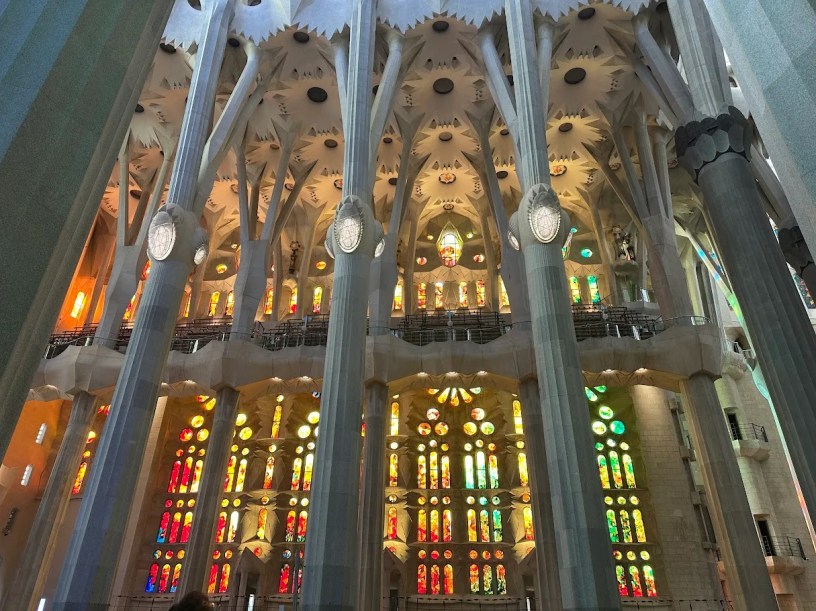
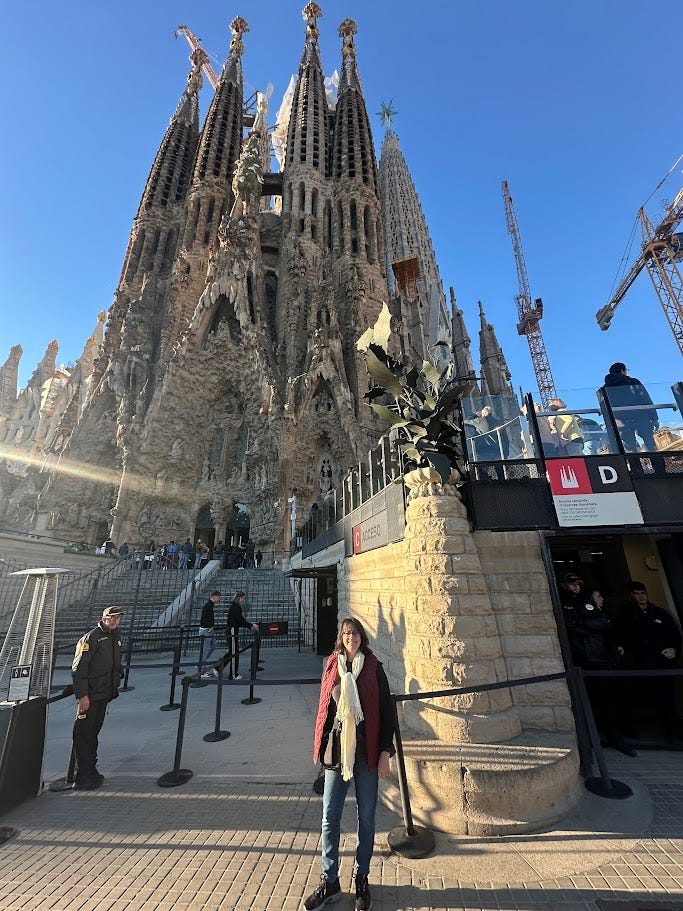
We started our full day there by heading to Sagrada Familia, an iconic church designed by renowned architect Antoni Gaudi that has been under construction since 1882. I hadn’t heard of it before planning the trip and visiting churches isn’t usually on my itinerary, but it was deemed a “must-see” by online travel guides and personal recommendations so I added it to our list.
I’m so glad we went. First of all, it was beautiful, especially from the inside with the colorful stained glass windows, intricate columns and symbolic religious details. As someone with no architecture background or lingo nor deep knowledge in Christianity, I won’t attempt to describe it, but the guide pointed out the religious significance of the different elements of the building and it was fascinating to see all the details Gaudi included in the design.
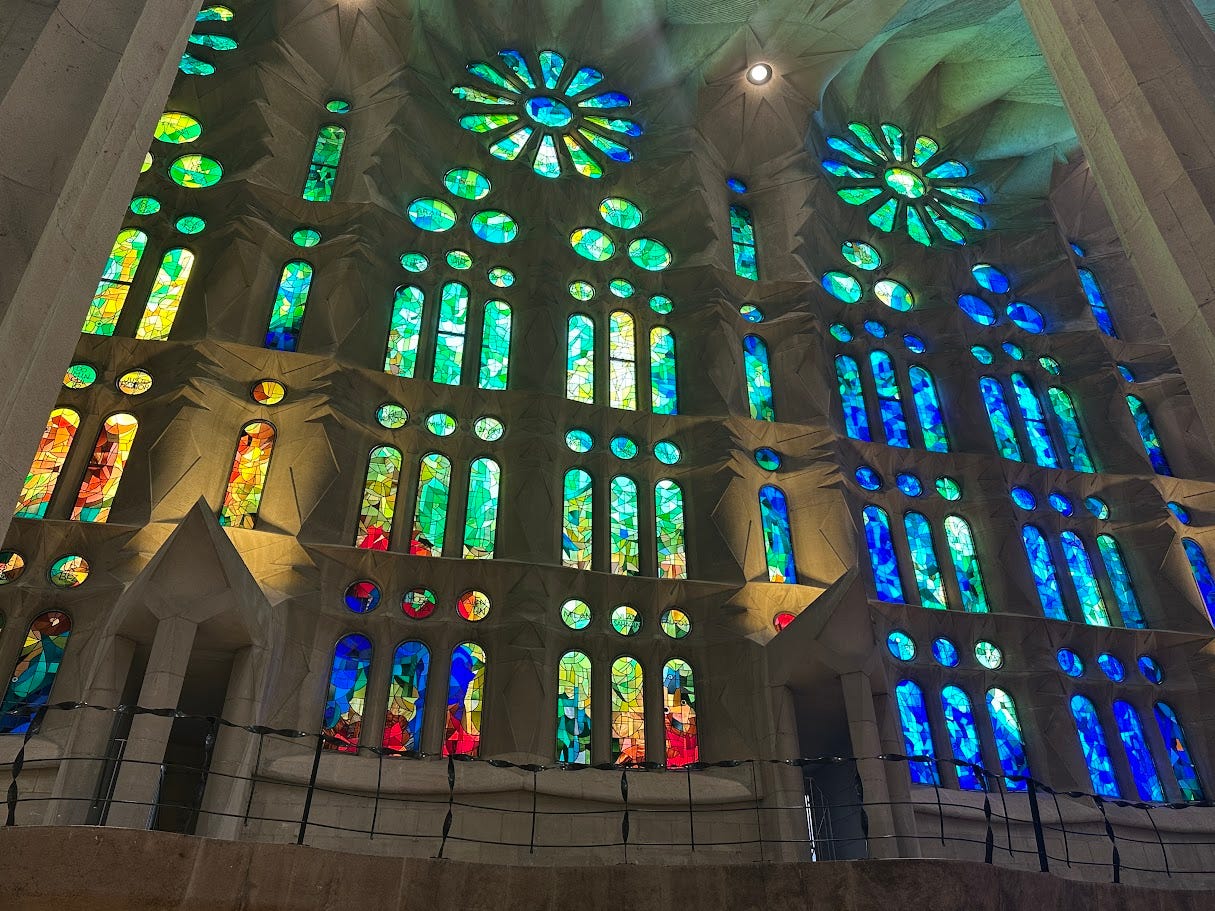
One thing that was so moving about the whole experience was seeing this physical manifestation of one person’s passion. Gaudi dedicated 43 years of his life working on Sagrada Familia, beginning in 1883 when he took over as the chief architect (construction began in 1882) to his death in 1926 at age 73, when he was buried in the Sagrada Familia crypt.
While today it is a UNESCO Heritage Site, there were many times the basilica’s future was questionable. After Gaudi’s death, construction halted for about a decade due to funding issues and then after that, due to the Spanish Civil War. The site was vandalized during the war, which destroyed some of Gaudi’s original plans and models. In 2011, there was a fire and work paused for a short while during the Covid-19 pandemic. Construction is now expected to be completed in 2026, a century after Gaudi’s death.
One day in 1926, the 73-year-old Gaudi was taking his daily walk when he was struck by a tram. Witnesses assumed he was destitute because he had no identification papers on him and he appeared disheveled. He was taken to a hospital where nobody recognized him and it wasn’t until the next day when people realized he was missing and found him at the hospital. He died two days later.
At the time of his death, only 15-25 percent of the construction was finished, but now, 99 years later, visitors to Barcelona still marvel at his inspiration.
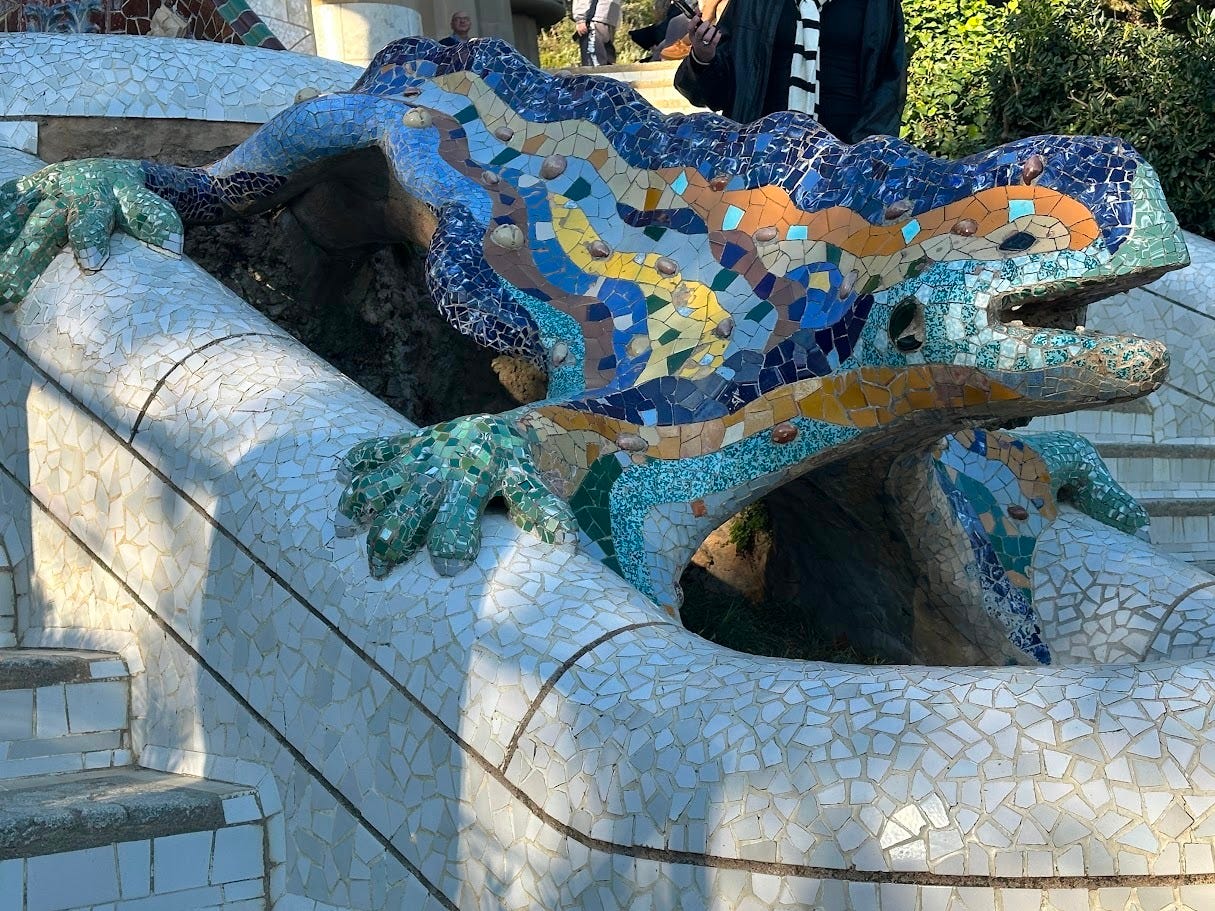
Later that afternoon, we visited Park Guell, a public park designed by Gaudi.
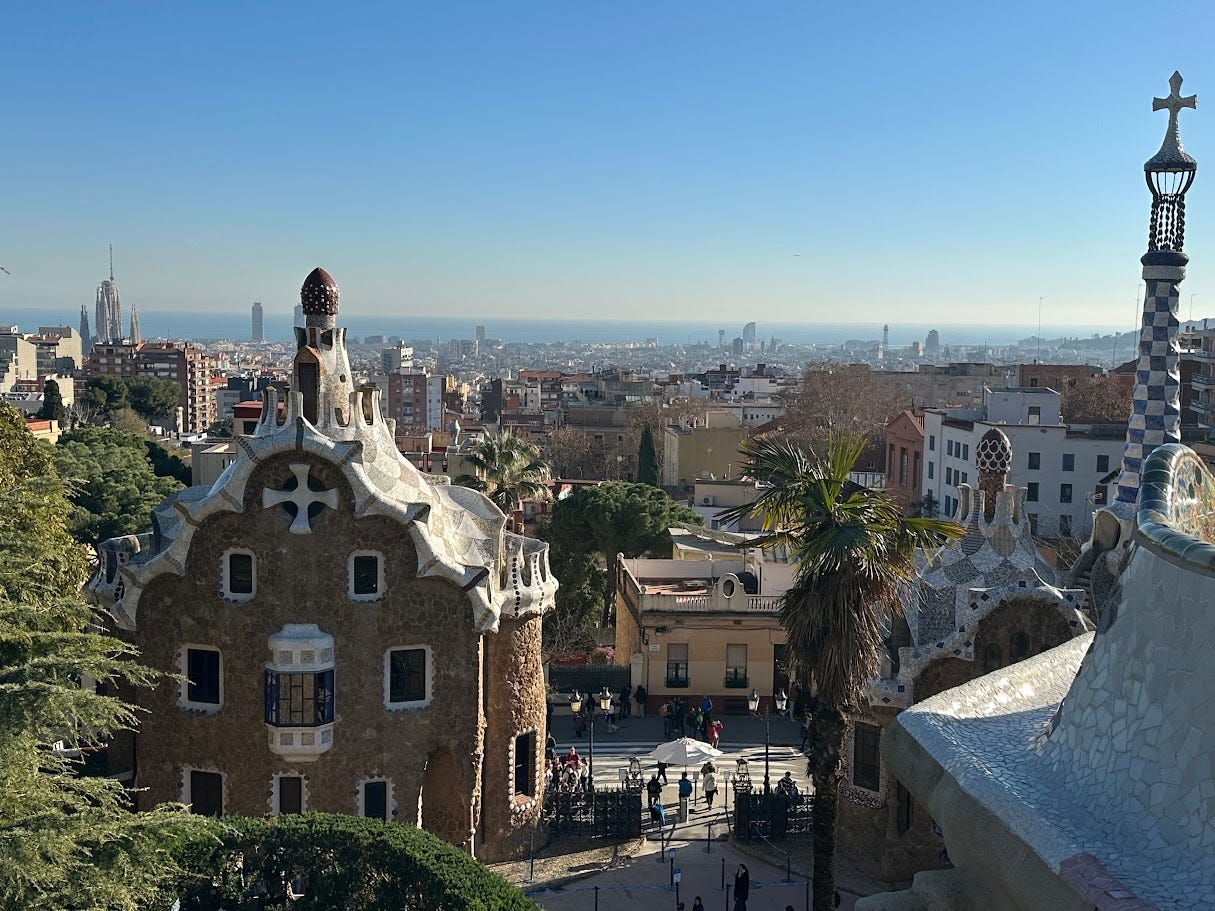
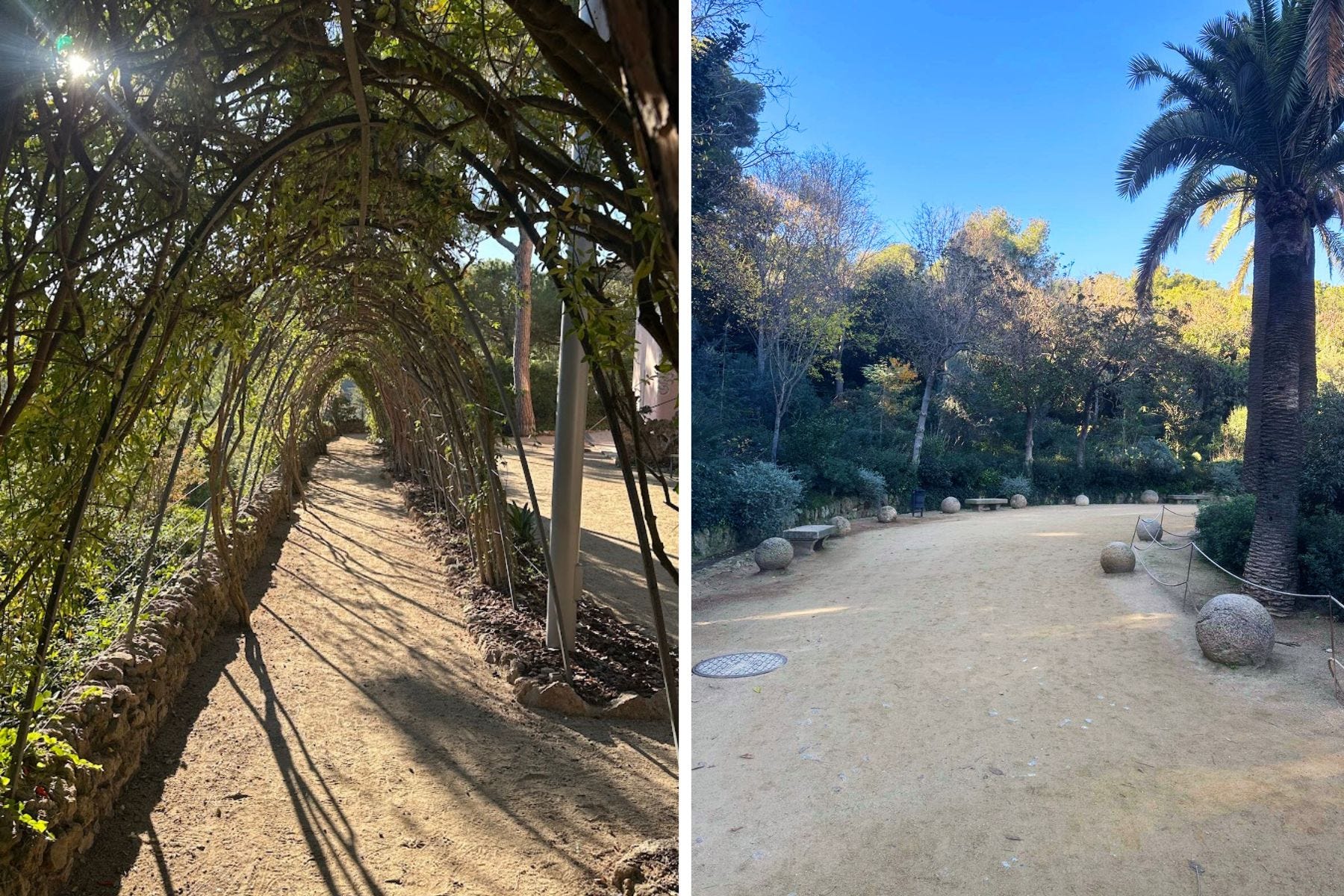
Originally the grounds were meant to be a luxury residential area and Gaudi’s house is on the property (now the Gaudi House Museum, which we also toured). The park was meant to look like it could be the setting for a fairy tale and it definitely gives off those vibes with its whimsical buildings and mosaics. By the time we got there, we had already spent time in the touristy crowded areas of the Gothic Quarter and La Rambla so we really appreciated the quiet and peaceful nature of Park Guell.
(Travel tip if you’re planning on visiting Barcelona: Purchase your tickets to Sagrada Familia and Park Guell far in advance from the official sites. That was advice I received so I’m passing it along as both sites did sell out for the day of our visit.)
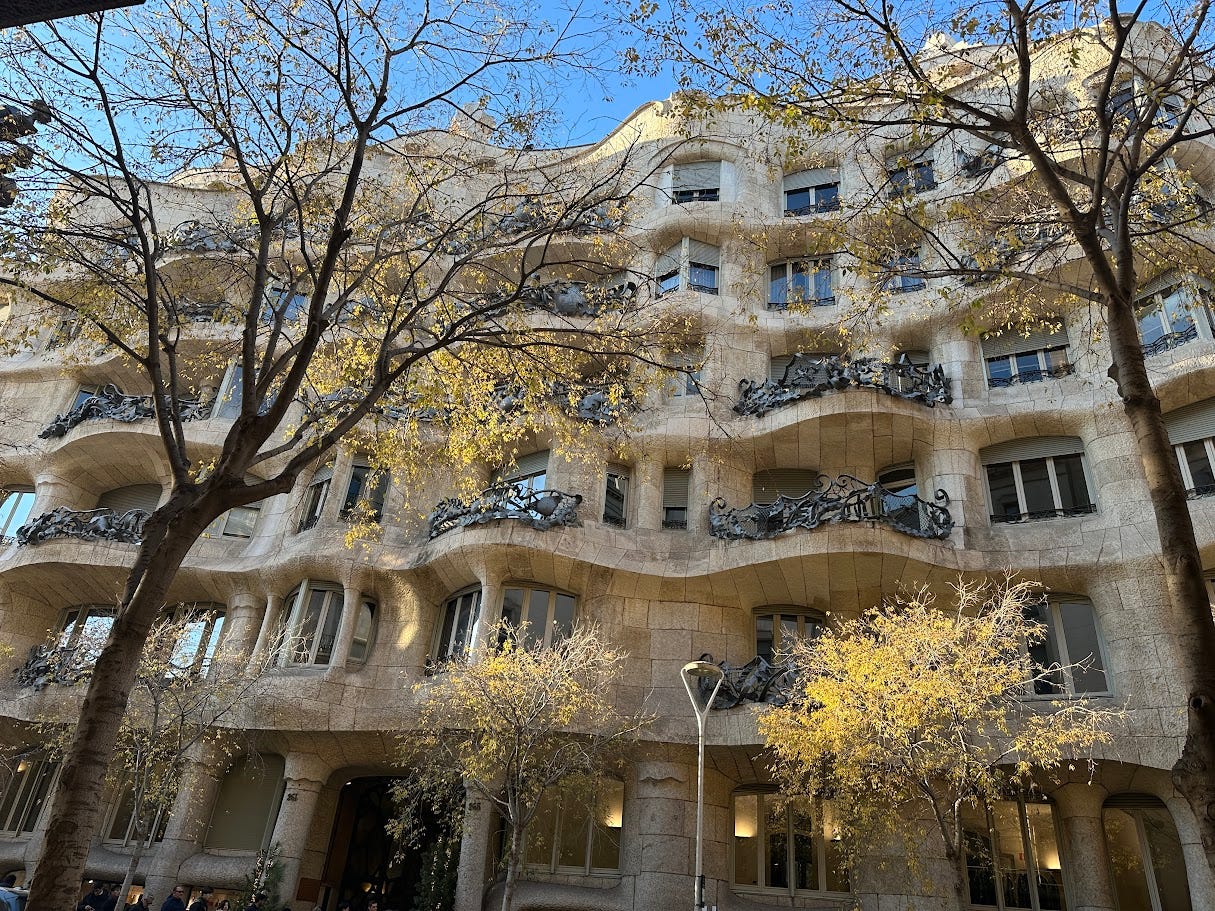
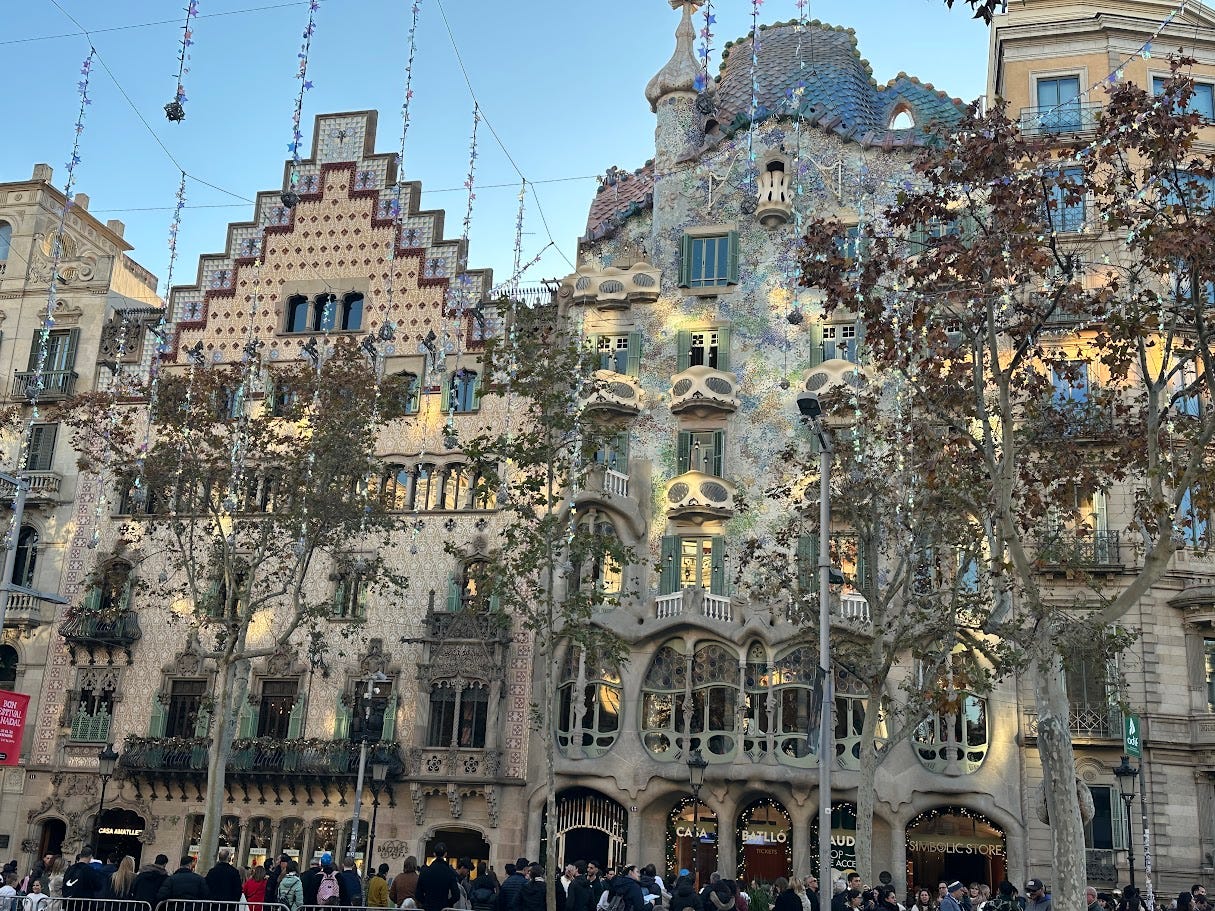
Other stops that day included lunch at the Mercat de la Boqueria (a vegetable empanada and a pineapple coconut smoothie – yum); a walk through Placa de Catalunya, a plaza in the center of Barcelona that was gearing up for a big music festival that day; a visit to the El Call Museum in the Gothic Quarter to learn more about the city’s Jewish history (more on that later in a future post); and a visit to the Eixample neighborhood to admire the outside of unique buildings designed by Gaudi: Casa Mila and Casa Batllo.
Although now Casa Mila is another UNESCO Heritage Site, the apartment building’s construction, between 1906 and 1912, met with some turbulence, including zoning and financial issues. Its design was met with mockery and ridicule in some publications of that time. For many years, the property was neglected.
Casa Batllo was built in 1877 and Gaudi transformed it between 1904 and 1906. It was owned by the Batllo family for many years and then from the 1950s on, it was taken over by different companies and individuals, until the Bernat family fully restored the house and opened it up to the public in 1995. It’s now another UNESCO World Heritage Site.
We decided not to tour the buildings as by this point it was late afternoon and we were a little toured out, but they’re both on my list to visit if I ever return to Barcelona, as well as Montjuic Castle and Montserrat. I also sampled tapas, churros and sangria, but didn’t get to try paella so that’s on the list for next time, too. If you have any recommendations for your favorite spots in Barcelona, let me know.
Gaudi’s work continues to serve as an inspiration. He committed so much of his life creating beautiful buildings and nearly 100 years after his death, people are still enjoying them. He encountered many challenges along the way, but he kept persevering and now he’s left a beautiful legacy for the world to enjoy.
As I was preparing to finally write about my visit to Barcelona, a news article popped in my newsfeed about Gaudi – last week Pope Francis declared that he declared Gaudi “venerable,” which is a major milestone toward being declared a saint. (Gaudi, whose nickname was “G-d’s architect,” was a deeply devout Catholic.) So between that and Sagrada Familia’s completion next year, Gaudi’s legacy is going strong.
I feel fortunate that I was able to visit Sagrada Familia as it was still under construction as it was like visiting a little bit of history in progress. If my son returns someday with his own child, he’ll be able to say that he remembers when there was scaffolding around the building and before the fourth tower was finished. (Although truthfully, I don’t know that he was listening much to the tour guide because he was busy taking pictures much of the time and wasn’t really paying attention to what she was saying. But I’m sure he appreciated it in his own way.)
This article originally appeared on the “A Medley of Moments” Substack.
 Leisah Woldoff